
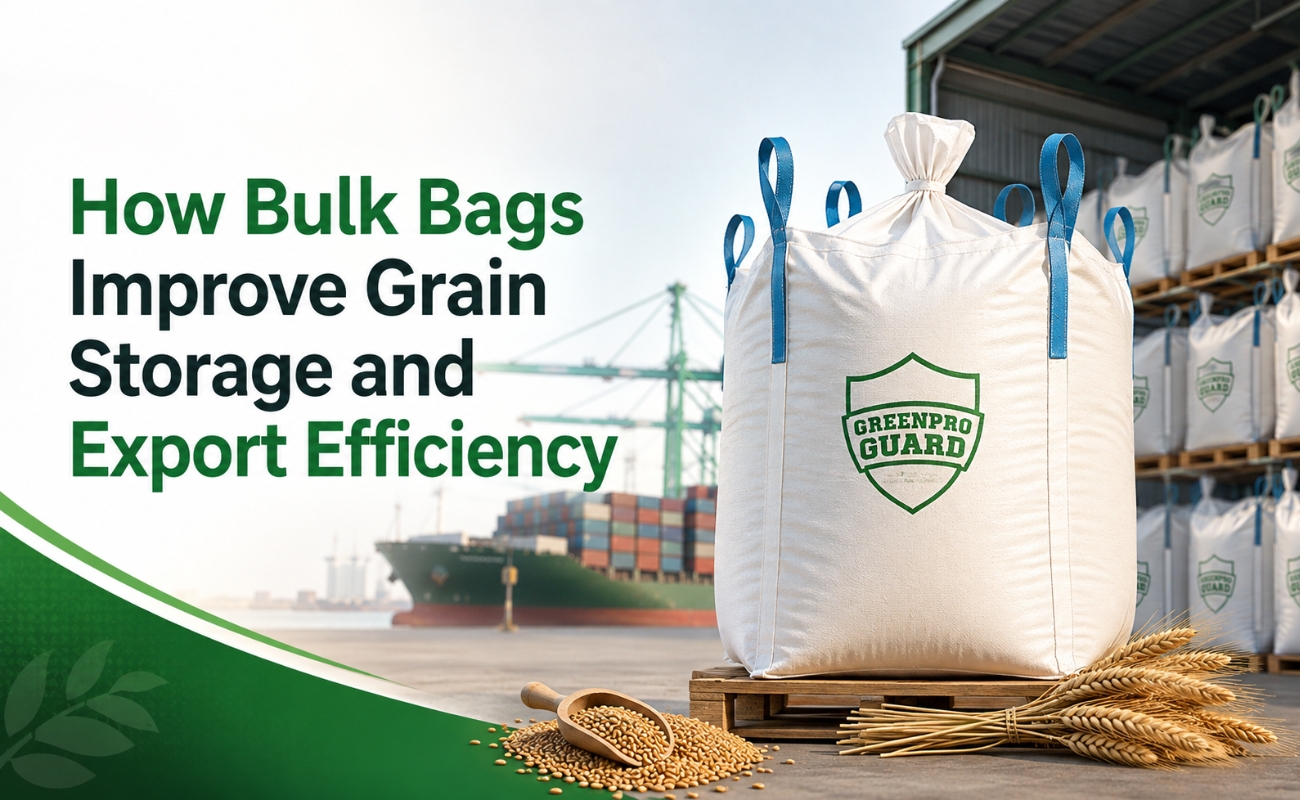
Vacuum Pack Bags for Bulk Grain Export: Features, Benefits and Global Standards
The global grain trade isn't just about a good harvest; grain must also reach international buyers without losing quality, weight, or commercial value. When wheat, rice, maize, pulses, seeds, and other dry goods are exported, vacuum pack bags and modern FIBC systems offer a practical solution that combines bulk handling with improved product protection. The right packaging can reduce storage losses, simplify loading, improve warehouse efficiency, and protect grain throughout its journey from the processing facility to the destination market.
Why Vacuum Pack Bags Matter in Modern Grain Export
Ordinary woven sacks cannot always solve the problems associated with bulk grain exports, since commodities may remain in warehouses, containers, ports, and on ships for up to a week before reaching buyers. During this journey, grain can face:
- Humidity and moisture exposure
- Insect infestation
- Mold and fungal growth
- Contamination from surrounding cargo
- Excessive handling
- Loss of quality during long storage periods
This is where Vacuum pack bags with hermetic protection add value. Instead of relying only on a woven outer structure, hermetic FIBC Bags combine bulk-handling strength with a protective internal liner.
The result is a packaging system designed for both logistics efficiency and commodity preservation.
What Are Hermetic FIBC Bags?
Hermetic FIBC Bags are Flexible Intermediate Bulk Containers fitted with an internal hermetic liner. The outer woven polypropylene structure provides strength for lifting and handling, while the internal barrier limits oxygen and moisture movement.
Unlike ordinary Bulk bags, which mainly provide physical containment, the hermetic liner adds environmental protection.
This makes them suitable for dry agricultural commodities such as:
- Rice
- Wheat
- Maize
- Pulses
- Coffee beans
- Seeds
- Spices
- Other dry food commodities
For exporters who handle each unit at several hundred kilograms or more, this format also reduces the need to manage many small grain storage bags.
Key Features Exporters Should Look For
Choosing an FIBC should not be based on capacity alone. Several features influence handling efficiency and cargo protection.
- Strong Outer Construction: A durable woven polypropylene body helps the bag withstand routine lifting, warehouse movement, and transportation.
- Hermetic Inner Liner: The liner creates the protective barrier that differentiates Hermetic FIBC Bags from conventional FIBCs. It helps restrict oxygen and moisture entry during storage.
- Shape Retention: Baffle construction can help maintain a more stable rectangular shape after filling. Better shape retention can support efficient warehouse space utilization and stacking arrangements.
- Controlled Discharge: A suitable discharge system allows grain to be emptied with greater control, reducing unnecessary handling and spillage.
- Suitable Bulk Capacity: Capacity must match commodity density, handling equipment, warehouse design, and transportation requirements.
These features allow FIBC grain storage solutions to perform as part of the logistics system rather than simply as packaging.
Benefits of FIBC Bags for Grain Export
- Faster Bulk Handling: Moving one large FIBC is often easier than handling numerous small sacks individually. Mechanical lifting equipment can simplify loading and movement inside warehouses.
- Reduced Labor Requirements: Fewer packaging units mean fewer individual lifting, stacking, counting, and loading operations.
- Better Warehouse Utilization: Well-designed bulk bags maintain their shape and can help operators organize warehouse space more efficiently.
- Improved Grain Protection: A hermetic liner helps protect properly dried grain from exchange with external moisture and oxygen, especially when the grain is stored or transported for a long period.
- Reduced Dependence on Fumigation: Hermetic storage depends on having airtight conditions; as the amount of oxygen within the sealed environment decreases, the conditions for the insects that feed on the stored product become less suitable.
It can enable cleaner grain storage and reduce the need for frequent chemical treatments.
Grain Storage Bags vs Hermetic FIBC Bags
Both formats have useful applications. Traditional or smaller grain storage bags are practical where individual lots must remain separate or where manual handling is required.
Hermetic FIBC Bags are better suited when:
- Large volumes are consolidated
- Forklifts or lifting equipment are available
- Warehouse efficiency is important
- Grain is prepared for commercial export
- Faster loading and unloading are priorities
An exporter can therefore use smaller bags during collection and grading, then transfer the combined amounts into FIBCs for commercial storage or dispatch.
What Global Standards Matter for FIBC Export Packaging?
Exporters should consider packaging standards as seriously as capacity and price.
ISO 21898:2024 covers FIBCs intended for non-dangerous solid materials. It addresses areas including materials, construction, design, type testing, marking, selection, and safe use.
For grain exporters, practical checks should include:
- Rated load and safe handling requirements
- Lifting loop design
- Bag construction and testing
- Clear product identification and traceability
- Suitability for the intended commodity
- Food contact requirements for the destination market
Food regulations differ from country to country, so exporters must check requirements with buyers, importers, and relevant authorities before deciding on packaging.
The strongest packaging strategy combines safe FIBC handling with appropriate food-grade materials and destination-specific compliance.
Why GreenPro Guard Hermetic FIBC Bags?
GreenPro Guard Hermetic FIBC Bags are designed specifically for dry agricultural goods including grains, pulses, and coffee.
The durable woven outer structure, integrated hermetic liner, baffle construction, and bulk-handling design help businesses safeguard their commodities while simplifying warehouse and export operations.
For grain traders, farmers, processors, and exporters, this means one solution can address several concerns, including moisture protection, pest control, storage efficiency, and bulk movement.
GreenPro Guard also offers different hermetic solutions across the agricultural supply chain, allowing customers to select packaging according to quantity and application rather than using one format for every requirement.
Conclusion
The success of grain exports relies on preserving the grain that has already been produced, since quality losses during storage and transportation directly affect margins, buyer confidence, and future business.
Hermetic FIBC bags offer the handling advantages of bulk bags with the protective features of hermetic storage, providing a practical solution for exporters who want improved protection, easier handling, and more efficient bulk logistics.
Contact GreenPro Guard for hermetic packaging solutions developed around real agricultural storage and export needs. This protects your grain, simplifies your operations, and lets you deliver quality with confidence in international markets.
FAQ
Why are Vacuum pack bags useful for grain export?
What makes Hermetic FIBC Bags different from regular Bulk bags?
Which global standard applies to FIBC bags for non-dangerous goods?
Are Hermetic FIBC Bags suitable for coffee as well as grains?
What should exporters check before buying grain storage bags?
Recent Posts

Common Storage Challenges Solved by Hermetic Container Liners

Are Hermetic FIBC Bags the Future of Safe Agri Commodity Storage?

How Coffee Packaging with Hermetic Bags Protects Beans During Long-Distance Export
Tags
0266-222-7100 / 200
marketing@rishifibc.com