
Washed, Natural or Honey: How Processing Method Changes Green Coffee Storage Needs
Two lots of green coffee can leave the same farm and arrive at the roastery in very different shape. The processing method often explains why. Washed, natural and honey coffees hold moisture, sugar and aroma differently, so each one needs its own approach to green coffee storage. This guide explains how each method works and what it means for your warehouse.
What is washed coffee?
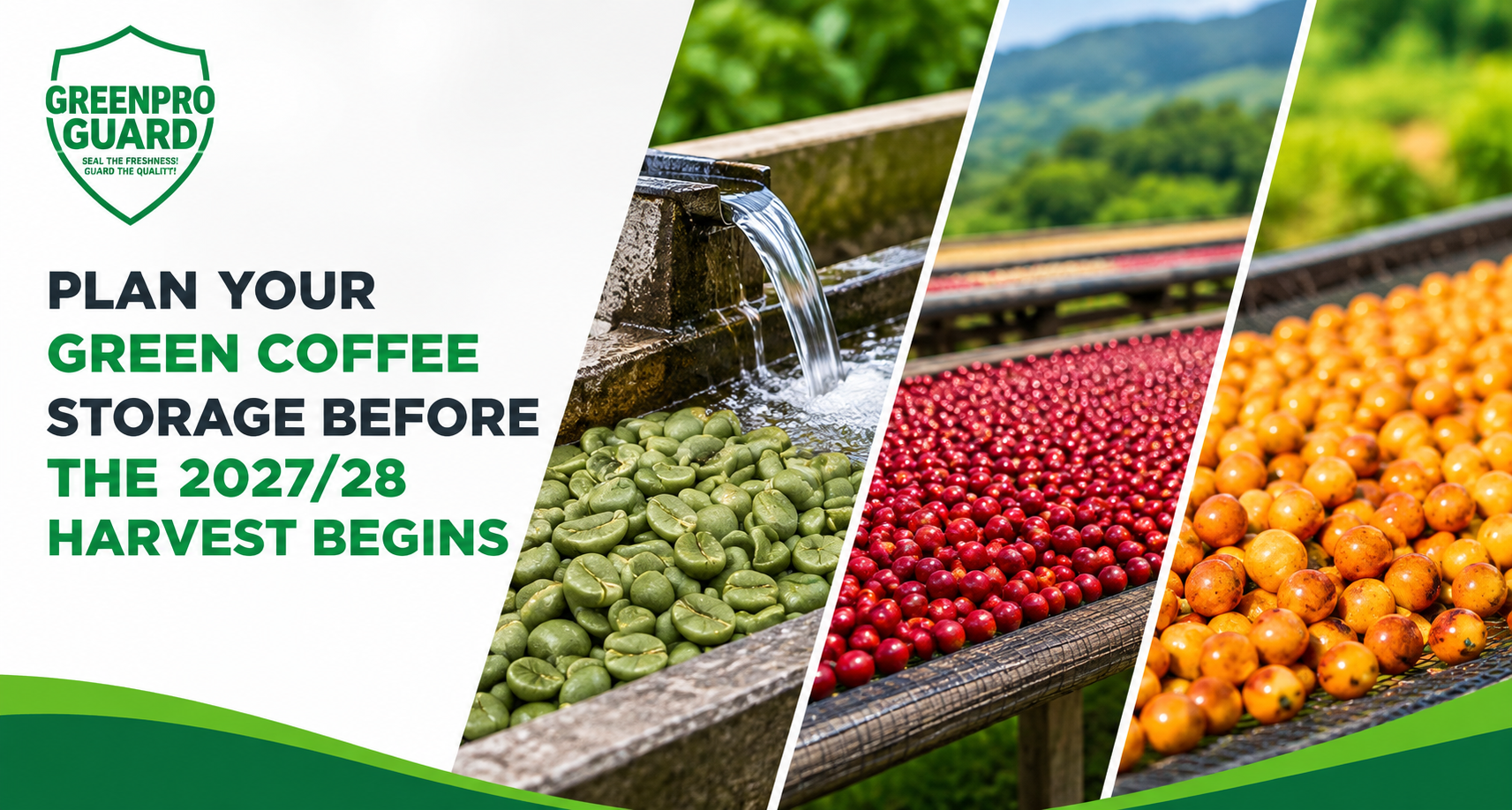
Washed coffee is processed with water to remove the fruit before drying. Producers strip the skin and pulp, ferment the beans to loosen the sticky mucilage, then rinse and dry them. This is often called the coffee wet process, and it gives a clean, bright cup.
Washed lots are the most forgiving in storage. Little fruit sugar stays on the bean, so mould and fermentation risks are lower. Even so, dried beans absorb moisture and odours from the air. In our experience with exporters, humid ports damage washed coffee more often than people expect.
What is natural process coffee?
Natural process coffee is dried whole, with the fruit still around the bean. Producers spread the cherries on patios or raised beds for several weeks. The fruit sugars move into the bean and create a sweet, fruity cup. The dried husk is removed afterwards.
That sweetness has a cost. Natural lots hold more sugar and often dry less evenly. If moisture rises in storage, mould and off flavours develop faster, and insects find the beans easier targets. Natural process coffee therefore needs tight control of humidity and air.
What is honey process coffee?
Honey process coffee keeps part of the mucilage on the bean during drying. The skin comes off, but the sticky layer stays. Producers grade the result as yellow, red or black, depending on how much mucilage remains. Black honey keeps the most. Storage needs sit between the other two methods. Yellow honey behaves much like washed coffee. Black honey behaves closer to natural.
Did you know? Honey process coffee contains no honey. The name comes from the sticky feel of the mucilage.
Which method needs the most careful green coffee storage?
Natural lots need the most care, followed by black and red honey, yellow honey and then washed. The table shows the pattern. Whatever the method, the target is the same. Many exporters aim for 10 to 12 percent moisture. The Specialty Coffee Association also treats water activity as a better indicator than moisture alone, and sets a limit below 0.70 aw for specialty grade green coffee.
| Method | Fruit sugar on bean | Moisture risk in storage | Storage need |
| Washed | Low | Lower | Protection from humidity and odours |
| Yellow honey | Low to medium | Moderate | Steady humidity control |
| Red and black honey | Medium to high | Higher | Strong moisture barrier |
| Natural | High | Highest | Airtight, moisture proof storage |
How do hermetic bags and barrier liners help?
Ordinary jute and woven sacks let air and moisture pass freely. Hermetic packaging solutions block both. A multilayer barrier film keeps oxygen and humidity out, so beans stay at the moisture level they had when packed. Oxygen inside also falls over time, which discourages insects and mould without fumigation.
Greenpro Guard hermetic bags hold 30 to 100 kg and suit specialty lots, including delicate natural and honey batches. Barrier liners work inside indoor bins and bulk containers. As coffee storage bags, they also protect aroma, which matters most for fruity naturals.
Pack only when beans are properly dry, and seal the bag fully. A hermetic bag protects the moisture level it is given. It cannot fix a wet lot.
Key takeaways
Good green coffee storage starts with knowing the process.
- Washed coffee carries the least sugar and the lowest storage risk.
- Natural coffee carries the most and needs the tightest control.
- Honey coffee falls in between, depending on the grade.
- Dry beans to a safe level first, then protect them with a high barrier bag or liner.
Protect your coffee with Greenpro Guard
Processing decides how a bean behaves. Storage decides how long its quality lasts. Greenpro Guard makes hermetic bags and barrier liners for coffee producers, exporters and bean manufacturers who cannot afford moisture damage or faded aroma. Talk to our team before your next harvest or shipment, and give your green coffee storage needs the protection they deserve.
FAQ
Store green coffee in a cool, dry place, away from strong odours and direct sunlight. Keep moisture near 10 to 12 percent and use hermetic bags or barrier liners to block humidity, oxygen and pests.
Yes. Natural coffee holds more fruit sugar and dries less evenly, so it ages and spoils faster. Washed coffee is more stable. Honey coffee falls between the two, depending on how much mucilage remains on the bean.
Natural process coffee is dried with the whole cherry intact. The fruit sugars soak into the bean during drying, creating a sweet, fruity flavour. It needs careful storage because that sugar raises moisture and mould risk.
Washed coffee is processed with water. Producers remove the skin and pulp, ferment the beans to loosen the mucilage, then rinse and dry them. The result is a clean, bright cup that stores more easily than natural coffee.
Yes. Hermetic bags and barrier liners block oxygen and moisture, which protects the sugars and aroma in natural and honey lots. They work best when beans are fully dry and the bag is sealed properly
Recent Posts

Washed, Natural or Honey: How Processing Method Changes Green Coffee Storage Needs

Coffee Harvest 2027/28: Set Up Your Green Coffee Storage Before Picking Starts

How Do Storage Grain Losses Occur? 6 Causes and How Hermetic Bags for Grain Storage Stop Them
Tags
0266-222-7100 / 200
marketing@rishifibc.com