Ask any grain exporter or coffee shipper what keeps them up at night, and the answers are remarkably consistent. Moisture. Container condensation. Insect infestation. Fumigation paperwork. Cargo rejected at the destination port. All of these are downstream consequences of one upstream decision: what type of hermetic container liners were used before the container doors were sealed.
Standard container liners provide a physical barrier between cargo and the container walls. That is their entire value proposition. They do not control the container's atmosphere. They do not stop condensation. They do not eliminate insects. They reduce direct contact with the metal surfaces.
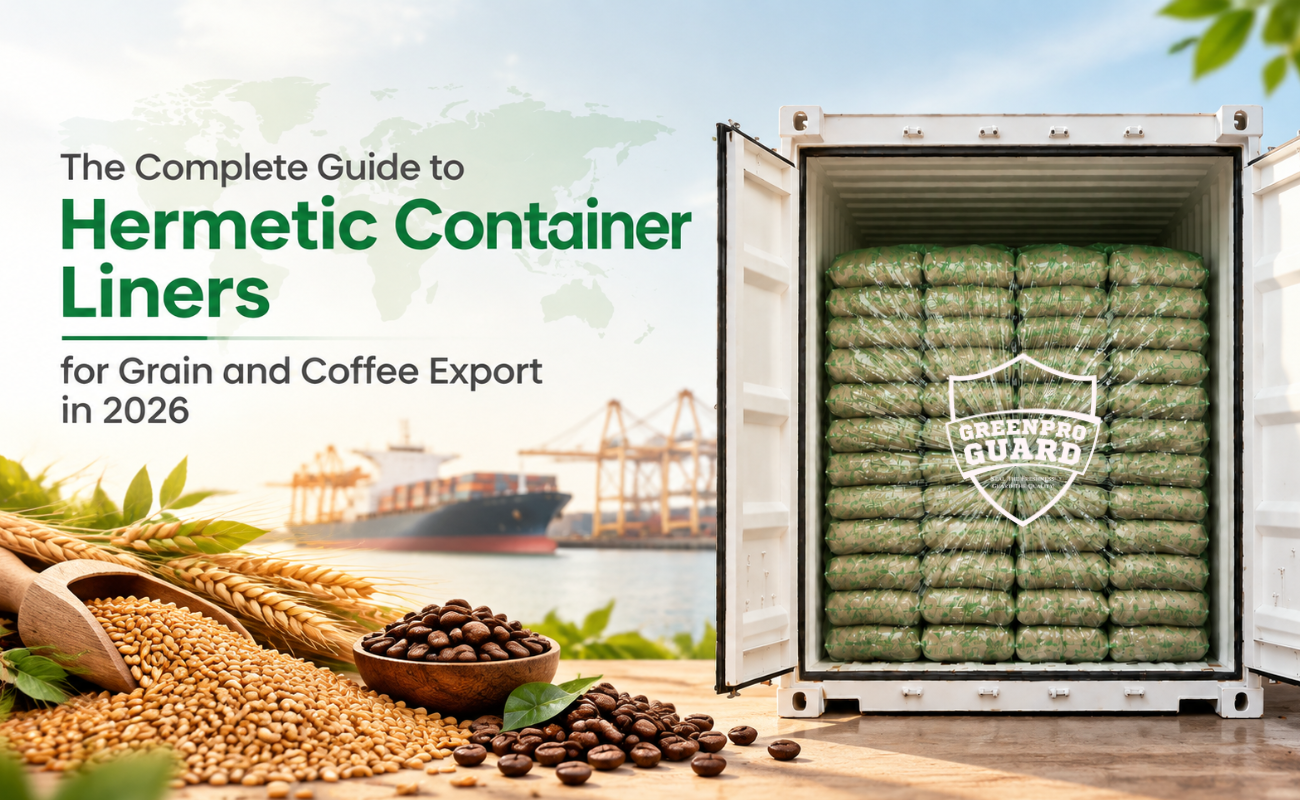
Hermetic container liners do something categorically different. They seal the entire interior of the shipping container into a controlled atmosphere that removes the conditions that cause every major storage and transit problem simultaneously. This guide walks through the five most common storage and transit challenges in bulk agri commodity export, and explains exactly how hermetic container liners solve each one.
Challenge 1: Container Condensation and Moisture Damage
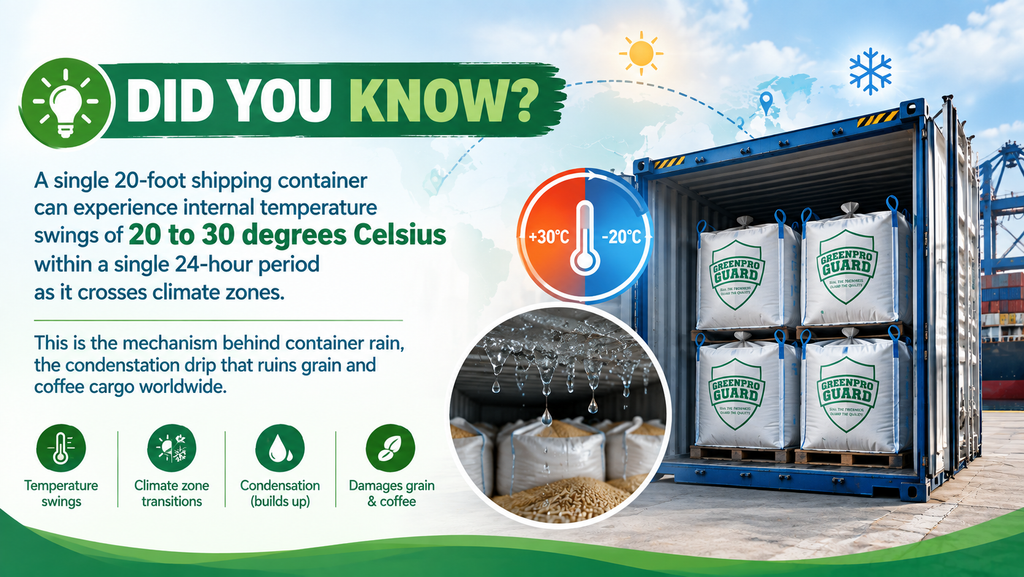
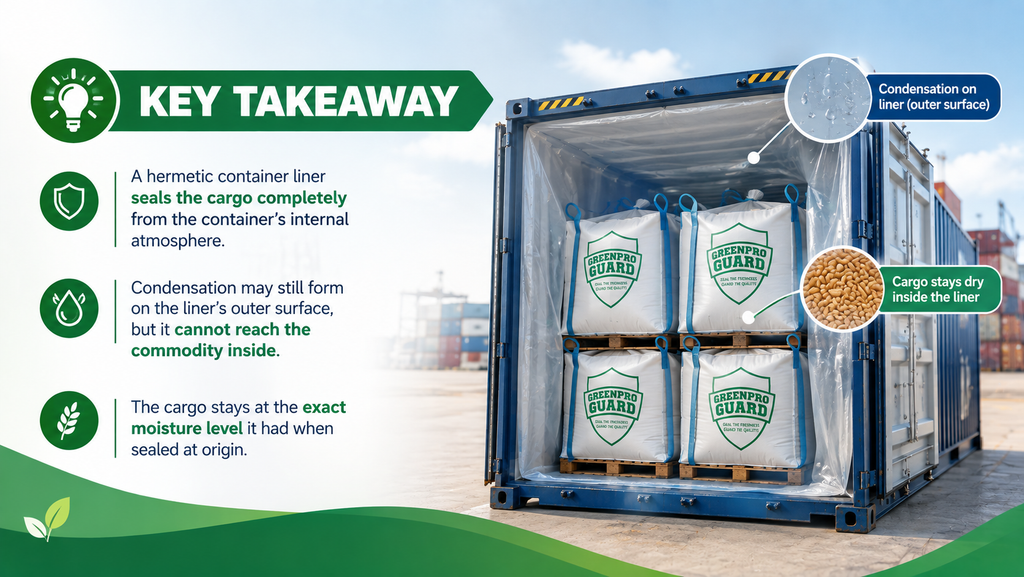
Container rain is the worst problem in shipping bulk commodities, yet it's the least discussed. When a container loaded in tropical humidity enters cooler waters or cools overnight, the warm, humid air trapped inside cools, and water vapour condenses on the metal ceiling and walls, dripping directly onto the cargo below.
For grain, this condensation can raise moisture content above safe storage levels. For green coffee, it leads to mould growth and flavour deterioration, resulting in roasteries rejecting the beans. For seeds and pulses, it ruins germination quality and grade integrity.
Challenge 2: Insect Infestation During Long Transit Periods
Insects can have a transit period of 30 to 90 days, during which they can complete one or more reproductive cycles inside a loaded container. If weevils, the larvae of grain borers, or khapra beetles are found alive at the destination port, this leads to compulsory quarantine, further fumigation at the importer's cost, and, in several markets, destruction of the cargo.
Standard container liners provide no barrier to insects already present in the grain at loading. Hermetic container liners deplete oxygen inside the sealed environment to below 2% within 72 to 96 hours. At that oxygen level, insects at every life stage, including eggs and larvae, are eliminated through suffocation. No fumigant is applied. No residue is left.
QUICK FACT: Hermetic sealing achieves what fumigation attempts to achieve chemically, without the cost, compliance documentation, or residue risk that makes fumigation a liability in organic and premium commodity markets.
Challenge 3: Fumigation Cost and Compliance Complexity
Fumigating bulk grain before shipment with phosphine or methyl bromide is a major expense for grain exporters. It adds time to the loading operation, requires a specialist contractor, generates compliance paperwork that must travel with the shipment, and raises residue concerns for importers that enforce strict maximum residue limits.
As import regulations on fumigant residues increase, the administrative workload of fumigation compliance grows. Hermetic container liners eliminate this cost and complexity. If the hermetic seal is intact at the point of origin, there is no need for any further insect control measures. The sealed atmosphere is the treatment.
Challenge 4: Oxygen Exposure and Quality Deterioration
The problem is most clear in speciality coffee, but it applies to all agricultural commodities that contain volatile compounds that determine quality. If coffee or any such commodity is exposed to oxygen for a long time, the lipids, aromas, and enzymes inside it will oxidise. The grain loses nutritional value. The coffee loses its cup score. The seeds also experience a decline in germination rate. All these declines build up and, once they happen, cannot be reversed.
| Commodity | What Oxygen Exposure Damages | What Hermetic Sealing Preserves |
| Wheat / Rice / Maize | Nutritional density, grade, dry weight | Grade integrity, moisture content, weight |
| Green Coffee | Volatile aromatics, cup score, flavour profile | Origin flavour notes, specialty grade pricing |
| Seeds and Pulses | Germination rate, oil content, protein quality | Germination viability, nutritional profile |
Hermetic container liners reduce internal oxygen to below 2 per cent and hold it there for the entire transit period. The commodity is chemically stable from sealing to opening. What went in is what comes out.
Challenge 5: Bulk Loading Inefficiency and Cargo Contamination Risk
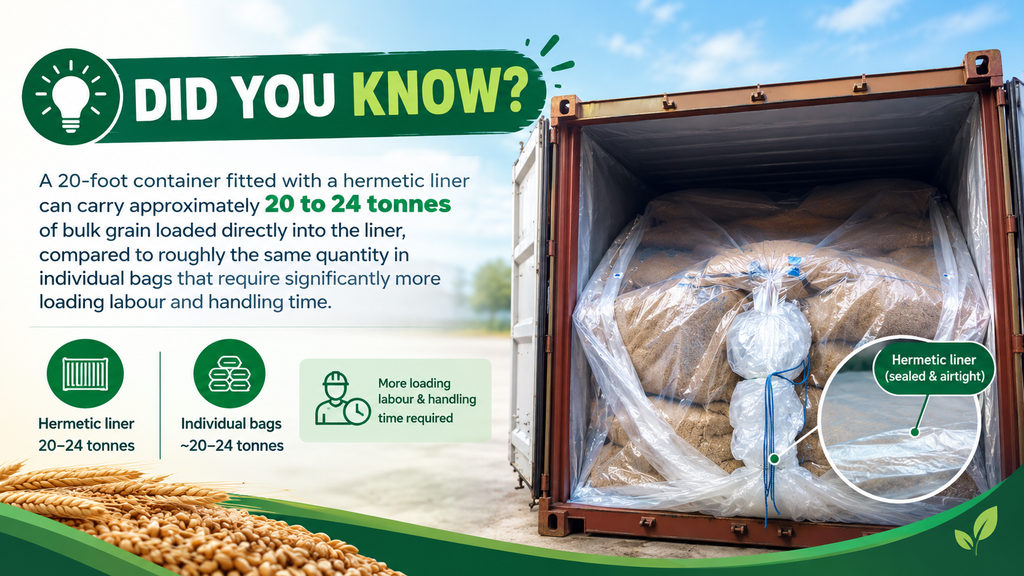
In standard liner systems, you must load each commodity bag individually into the container. Each bag represents a possible source of contamination, especially in the case of jute or woven polypropylene bags which have been reused. Handling multiple separate bags during loading, transit, and discharge increases the risk of cross-contamination, spillage, and physical damage.
Bulk loading can be carried out directly into the container fitted with the hermetic container liners. The grain or coffee is poured loosely into the sealed liner area, so there is no need to handle each bag individually. One hermetic seal covers the entire volume of the container. As with discharge at the destination, the liner's discharge mechanism controls the flow, reducing the risk of spillage and contamination at both the start and end of the journey.
Why Hermetic Container Liner Suppliers Matter as Much as the Product
The liner is only as good as the barrier film it is made from and the quality control behind its manufacturing. This is where choosing the right hermetic container liner supplier makes a real difference.
The Greenpro Guard hermetic container liners are made from a 7-layer ultra-high barrier film and have an oxygen transmission rate of at or below 2 cc per square metre per day together with a water vapour transmission rate of at or below 2 grams per square metre per day. These figures are not merely aspirational; they are published and auditable, and Greenpro Guard maintains them in every production batch as an unchangeable quality standard.
The liners are precision-cut for standard 20-foot and 40-foot ISO containers, food-grade certified for direct commodity contact, and designed for installation at the origin warehouse without specialist equipment. For exporters who need documentation of hermetic storage methodology as part of their export compliance package, Greenpro Guard provides the product specifications and testing records to support that documentation.
Hermetic container liners from reputable suppliers are not just a packaging product. They are a supply chain risk-management tool that eliminates the five most common causes of bulk commodity loss with a single decision.
Seal the Container Right, and Everything Else Gets Easier
Moisture damage, insect infestation, the cost of fumigation, deterioration due to oxygen, and inefficiencies in bulk handling are not separate issues, since they all stem from the same cause—an unsealed, uncontrolled container environment. Hermetic container liners eliminate all five problems at the source, before the container doors close and the voyage begins.
The global hermetic storage bags market is growing at 6.9% annually toward USD 2.08 billion by 2033. The exporters and logistics operators driving that growth have made one common decision: they chose hermetic grain storage solutions and hermetic container protection over conventional alternatives. They stopped accepting preventable cargo loss as a cost of doing business.
Ready to stop losing cargo to entirely preventable problems? Contact Greenpro Guard and speak with a product specialist who will specify the right hermetic container liner for your container size, commodity type, and shipping route. The right seal changes everything that follows.
FAQ
Hermetic container liners seal the entire interior of the container off from a controlled, low-oxygen atmosphere, preventing moisture from entering, killing insects by depleting oxygen, and stopping goods from losing quality during transport. Unlike standard container liners, which only provide physical separation from the container walls without controlling the atmosphere around the goods, hermetic liners control that atmosphere.
Yes, the hermetic seal reduces the oxygen level inside to below 2 per cent within 72 to 96 hours, killing all insects at every life e stage without the need for phosphine or any other fumigant. As a result, the entire bulk commodity export process eliminates the costs associated with fumigation, the need for compliance documentation, and the risk of chemical residue.
Hermetic container liners are used for bulk grain, including wheat, rice, maize, and sorghum, as well as green coffee beans, seeds, pulses, and spices. Any dry agri commodity where moisture, oxygen, or insect exposure causes quality deterioration during ocean transit benefits from hermetic container liner protection.
The hermetic liner seals the commodity off from the container's internal atmosphere. When condensation forms on the container walls or ceiling due to temperature fluctuations, the water cannot reach the commodity inside the sealed liner. Moisture content at sealing is maintained throughout the entire ocean voyage.
Seek a film with an oxygen transmission rate of 2 cubic centimetres per square metre per day or less, a water vapour transmission rate of 2 grams per square metre per day or less, food-grade certified film construction, and accurate sizing to fit the standard 20-foot and 40-foot ISO shipping containers. Published, auditable specifications indicate supplier reliability.