

Every year, somewhere between 14 and 37% of all harvested grain is lost before it reaches a buyer. Poor storage conditions, moisture ingress, fungal contamination, and insect infestation turn a productive harvest into a financial loss before a single sale. And yet, for decades, the solution to this problem has barely changed. Most grain storage bags in use today are the same woven polypropylene sacks that were standard twenty years ago.
This is beginning to change. Hermetic FIBC bags are becoming the new standard for storing bulk grain and exporting agricultural commodities. Market data, increasingly stringent international standards, and more farmers, traders, and exporters who have seen the results for themselves are driving this shift.

Why Conventional Grain Storage Bags Keep Failing
Standard woven bulk bags are designed to be breathable. What was once a benefit is now their biggest drawback in today's environment of stricter food safety standards and longer supply chains.
Oxygen passes through conventional grain storage bags continuously. So does moisture. Insects breed inside them freely. Mold finds everything it needs to grow. And over a storage period of three to six months, what started as Grade A grain becomes Grade B or worse.
What Hermetic FIBC Bags Actually Do Differently
A hermetic FIBC bag combines the structural strength of a standard bulk bag with a built-in 7-layer, ultra-high-barrier inner liner. The outer polypropylene woven shell bears the load and handles stacking and handling. The inner liner handles what the outer shell can't: it keeps the product in a completely airtight environment while preventing oxygen, moisture, and biological threats.
After sealing, the grain uses up the remaining oxygen through natural respiration. About 72 to 96 hours later, the oxygen level inside the bag drops below 2%. Insects then suffocate, and mould spores cannot germinate. The grain's own enzymatic deterioration slows down considerably. The weight, grade, and nutritional value remain unchanged from sealing until opening at the buyer's facility.
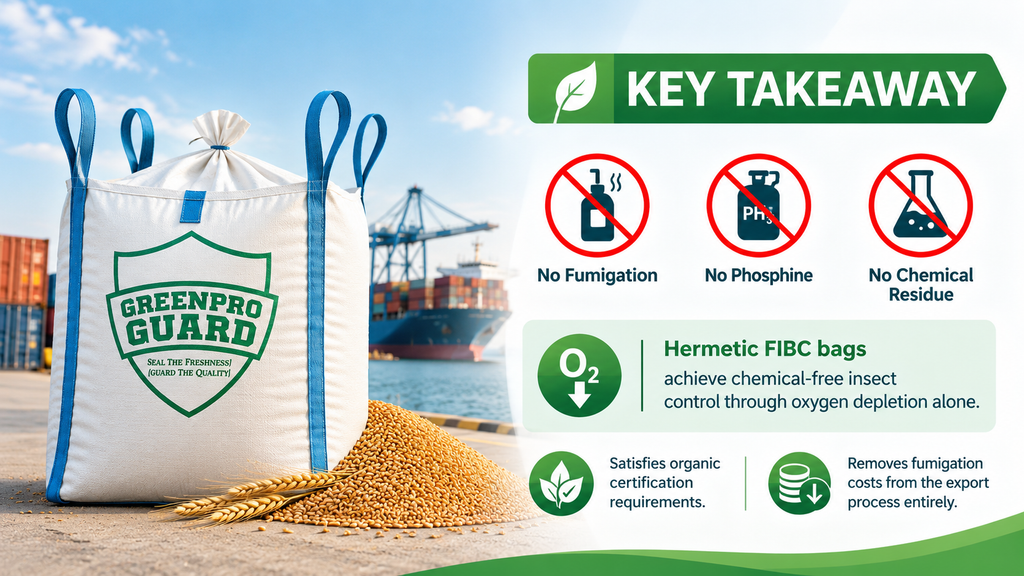
Multiple research studies have shown hermetic conditions are effective for storing food grains. Hermetic sealing reduces insect numbers to zero within 7 to 14 days. It keeps the grain at its sealed moisture level regardless of surrounding warehouse humidity.
Market Forces Driving Adoption of Hermetic Grain Storage Solutions
The numbers behind the market shift are clear: demand for hermetic grain storage solutions is rising in every major trading region for three converging reasons.
| Driver | What It Means | Who It Impacts |
| Rising food safety standards | EU, Japan, Middle East tightening mycotoxin and moisture limits | All grain exporters |
| Chemical-free certification demand | Buyers requiring fumigant-free documentation | Organic and premium commodity traders |
| Post-harvest loss reduction programs | USAID, GIZ, FAO funding hermetic adoption in developing markets | Smallholder farmers and cooperatives |
| Longer supply chain holding periods | Transit times of 30 to 90 days across climate zones | Exporters, logistics operators |
| Sustainability requirements | Recyclable and reusable bag systems reducing single-use waste | All buyers and operators |
In the Asia Pacific region where India, China, Vietnam, and Indonesia together produce hundreds of millions of tonnes of grain and coffee each year, hermetic bags have seen one of the highest adoption rates. India alone suffers annual post-harvest losses amounting to an estimated Rs 92,000 crore in the food-grain value, and hermetic FIBC bags directly address losses during storage.
Applications: Where Hermetic FIBC Bags Deliver the Most Value
- Bulk Grain Storage and Export: Wheat, rice, maize, sorghum, and pulses, stored in hermetic FIBC bags, remain in Grade A condition for 12 to 18 months. Because the exporting process eliminates fumigation, it meets the standards set by the port of destination and maintains consistent moisture content no matter how long transit takes.
- Coffee Bean Storage and Export: Coffee beans kept in hermetic conditions retain the volatile aromatic compounds which determine speciality cup scores. Manufacturers and exporters who use hermetic bulk bags find that roasters at the destination consistently report better cup quality that matches the samples taken before shipment.
- Seed Storage: To store seeds, seed companies use hermetic bags to keep germination rates high across different storage seasons; the airtight seal prevents enzymatic degradation that would otherwise lower germination to a level below commercial viability with conventional storage methods.
- Warehouse Inventory Holding: Commodity traders who hold large grain inventories before sale benefit from hermetic protection because grade is preserved regardless of ambient warehouse humidity. The grade bought is the grade sold.
Is This the Future? The Evidence Says Yes
The future of the hermetic storage market is clear. The 6.9% compound annual growth rate between 2026 and 2033 indicates not a trend, but a fundamental shift in how global agri-commodity supply chains protect post-harvest quality.
The consequences of not using conventional storage are obvious: containers are rejected, inventory is downgraded, fumigation adds costs, and buyers leave. Switching to hermetic FIBC bags adds a bag-level premium, but this extra cost is recouped within a single storage cycle through loss prevention alone.
Exporters, traders, and warehouse operators who still use standard woven bulk bags to store food grains are not only taking on risk, but also losing a measurable amount of income each season.
Hermetic FIBC bags are not a premium choice for premium producers; they are a cost-effective solution for anyone who takes protecting the quality and value of the products they store and export seriously.
Greenpro Guard Is Where This Future Is Built
The question is no longer whether hermetic storage is the future of agri commodity handling. The market data, the science, and the adoption curve have already answered that. The question now is which hermetic FIBC bag delivers the performance standards your supply chain requires.
It is no longer up for debate whether hermetic storage will be the future of agricultural commodity handling, since market data, scientific evidence, and the rate of adoption have already answered that. The current issue is which hermetic FIBC bag meets your supply chain's performance standards.
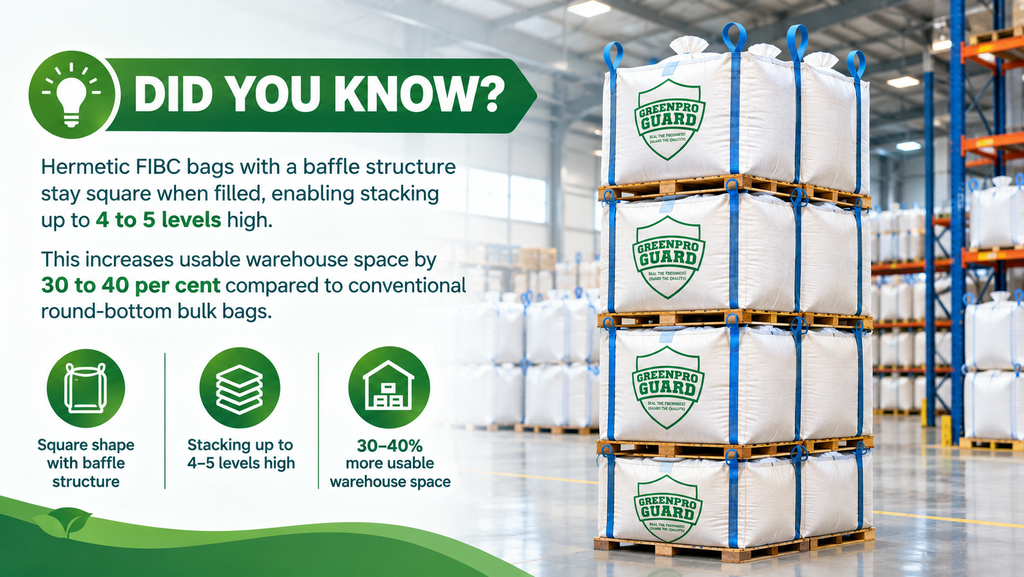
The Greenpro Guard bags are engineered with a 7-layer ultra-high barrier film, with oxygen transmission rate and water vapour transmission rate specifications at or below 2, featuring food-grade certified construction and a baffle structure that enables commercial stacking and handling. Grain traders, coffee exporters, seed companies, and warehouse operators in India and across global supply chains use this same product technology.
If you're looking for grain storage bags designed to meet the requirements that storage will have in 2026 and beyond, then get in touch with Greenpro Guard today. Your stock, your grade, and your relationships with buyers all deserve a bag engineered to protect each.