
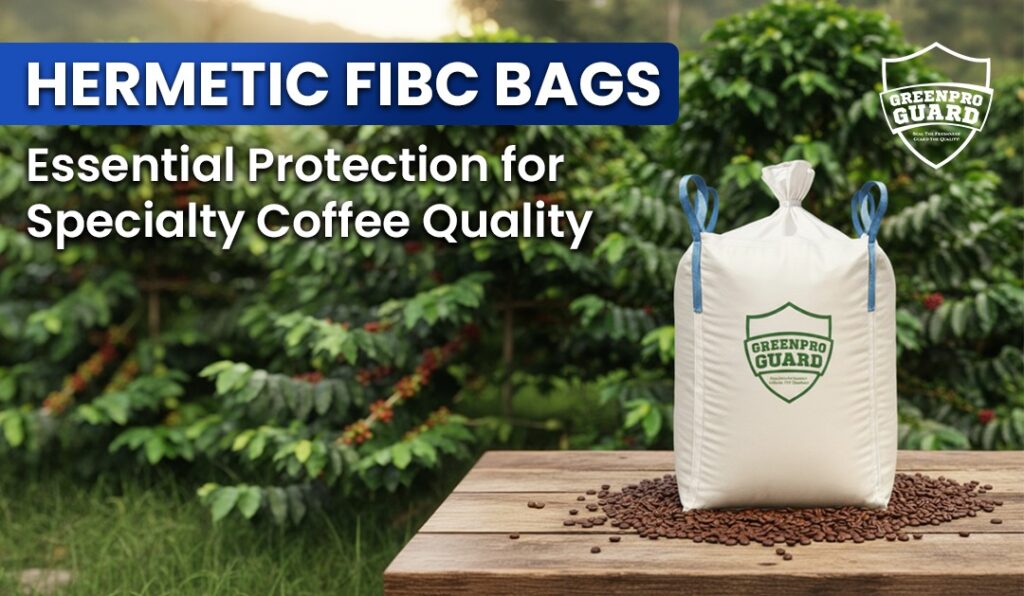
The Role of Hermetic FIBC Bags in Preserving Specialty Coffee Beans
Specialty coffee commands premium prices because of its exceptional quality, distinct flavor profiles, and carefully controlled processing. However, the journey from farm to roaster presents serious challenges. Green coffee beans are highly sensitive to environmental conditions during storage and transit. Without proper protection, even the finest beans can lose their cupping scores, aromatic complexity, and market value.
Why Specialty Coffee Beans Require Critical Storage Protection
Green coffee beans remain metabolically active after processing, making them vulnerable to degradation from moisture, oxygen, and temperature fluctuations. Specialty coffee scoring 80+ points on the SCA scale can lose several points within weeks due to storage mistakes, causing financial losses and reputation damage. Origin characteristics like Ethiopian floral notes or Colombian caramel sweetness are fragile. Improper storage allows these distinctive qualities to fade or develop off-flavors that buyers immediately detect during cupping sessions.
Storage Challenges That Compromise Coffee Quality
- Moisture Ingress and Mold Growth: Green coffee beans maintain optimal moisture content between 10-12%. When storage allows moisture absorption, beans become susceptible to mold that destroys flavor and produces dangerous mycotoxins. Preventing moisture damage in coffee bean storage is essential for quality and food safety. Humid warehouses and inadequate packaging enable atmospheric moisture absorption, especially during ocean freight where containers experience condensation from day-night temperature changes.
- Oxygen Exposure and Staling: Oxidation gradually degrades organic acids, lipids, and volatile compounds creating coffee’s signature flavors. Oxygen control solutions for coffee beans become critical during long-term storage common in international trade. Extended exposure produces flat, stale coffee lacking the brightness and complexity specialty grades require.
- Insect Infestation: Coffee bean weevils and storage pests can devastate entire shipments. Insect infestation prevention in coffee warehouses requires packaging that creates impenetrable barriers, protecting inventory from contamination and economic loss.
- Temperature Fluctuations: Container shipping exposes coffee to extreme temperature variations. Heat accelerates ageing while temperature swings promote internal condensation. These conditions combine to degrade quality more quickly than in stable storage environments.
- Moisture Ingress and Mold Growth: Green coffee beans maintain optimal moisture content between 10-12%. When storage allows moisture absorption, beans become susceptible to mold that destroys flavor and produces dangerous mycotoxins. Preventing moisture damage in coffee bean storage is essential for quality and food safety. Humid warehouses and inadequate packaging enable atmospheric moisture absorption, especially during ocean freight where containers experience condensation from day-night temperature changes.
Limitations of Traditional Coffee Packaging Methods
Jute bags have served the coffee industry for generations—affordable, renewable, and stackable. However, jute is porous, offering virtually no protection against moisture, oxygen, or insects. Beans continuously interact with ambient air, steadily losing quality. Some exporters add polyethylene liners inside jute bags, but these rarely create true airtight seals. Oxygen penetrates through gaps and imperfect closures, offering only marginal improvement. Non-hermetic bulk bags similarly fail the fundamental requirement: green coffee beans need complete environmental isolation to maintain post-harvest quality during extended storage and international shipping.
Scientific and Practical Benefits for Coffee Quality
- Preservation of Cupping Scores: Maintaining cupping scores during coffee storage directly protects commercial value. Research demonstrates that hermetically stored coffee maintains sensory characteristics significantly better than conventionally packaged beans. Roasters purchasing months after harvest receive coffee cupping nearly identical to immediate post-processing samples.
- Extended Shelf Life Without Quality Loss: Green coffee stored in a hermetically sealed container maintains quality for 12-18 months or longer. This extended viability gives exporters greater sales timing flexibility and allows roasters to stock inventory without rushing to roast before degradation. The shelf life of green coffee beans in hermetic bags far exceeds traditional packaging methods.
- Mold and Mycotoxin Prevention: By blocking moisture ingress and limiting oxygen, hermetic storage creates conditions where mold cannot establish. This proves particularly valuable for coffee shipped through humid tropical ports or stored in high-humidity regions. How to prevent mold in coffee bean storage becomes straightforward when packaging provides inherent protection.
- Protection During Long-Distance Export: Container shipping involves weeks of transit through varying climate zones. Hermetic FIBC bags for specialty coffee beans provide consistent protection regardless of external conditions. Coffee arrives at the destination in comparable condition to when packaged.
- Preservation of Cupping Scores: Maintaining cupping scores during coffee storage directly protects commercial value. Research demonstrates that hermetically stored coffee maintains sensory characteristics significantly better than conventionally packaged beans. Roasters purchasing months after harvest receive coffee cupping nearly identical to immediate post-processing samples.
Real-World Applications Across the Coffee Supply Chain
For Coffee Exporters
Exporters benefit from reduced post-harvest losses and more predictable quality delivery. Safe storage of coffee beans during export means fewer rejected shipments and stronger buyer relationships. Hermetic bulk bags also reduce dependency on expensive climate-controlled warehousing, as the packaging itself provides environmental control.
For Specialty Coffee Roasters
Roasters purchasing hermetically stored coffee have confidence in consistent quality. Green coffee storage best practices for roasters include verifying that suppliers use proper hermetic packaging. This allows roasters to plan production schedules without concerns about rapid quality deterioration in their green coffee inventory.
For Warehouse Operators
Storage facilities managing multiple coffee origins appreciate hermetic packaging’s ability to maintain segregation and quality without complex environmental controls. Moisture control solutions for coffee warehouses become more effective when combined with hermetic bag storage systems.
Sustainability and Economic Advantages
Hermetic FIBC bags align with sustainability goals by enabling reuse across multiple shipping cycles. Quality preservation packaging for specialty coffee reduces spoilage and waste, supporting circular economy principles. Reduced product loss benefits the entire supply chain—from farmers whose quality work is preserved, to roasters showcasing origin characteristics, to consumers experiencing coffee as intended.
Protect Your Coffee Investment
Specialty coffee represents a significant investment in cultivation, processing, and careful handling. Protecting that investment through proper storage is essential for preserving value and market position. Hermetic FIBC bags offer reliable, science-backed protection that traditional packaging cannot match.
For exporters, roasters, and warehouse operators committed to consistent quality, hermetic storage solutions provide a competitive advantage, as even small cupping-point differences can affect pricing and reputation. As the global coffee trade expands, packaging technology reliably preserving specialty coffee quality becomes increasingly vital.
FAQ
Hermetic FIBC bags create completely airtight environments using specialized barrier layers preventing oxygen and moisture exchange. Jute bags are porous, allowing continuous air circulation that exposes coffee to oxidation, moisture absorption, and contamination, offering minimal quality protection.
Yes, research demonstrates hermetically stored green coffee maintains sensory characteristics for 12-18 months or longer. The airtight environment prevents oxidation and moisture changes degrading flavor compounds, preserving origin characteristics and complexity buyers expect from specialty coffee.
While initial investment exceeds jute bags, hermetic FIBC bags deliver superior ROI through reusability, reduced spoilage losses, minimized rejected shipments, and eliminated climate-controlled warehousing costs. They protect specialty coffee’s premium cupping scores and market value.
Hermetic bags block external moisture through impermeable barrier layers and airtight seals. Beans maintain original moisture content even in humid warehouses or ocean shipping. Without moisture increase or oxygen availability, mold growth conditions cannot develop.
Hermetic FIBC bags typically have a capacity of 500-1,000 kg. Manufacturers offer customization based on handling equipment, container loading requirements, and warehouse specifications while maintaining hermetic integrity. Consult experienced suppliers to match specifications with operational requirements.