
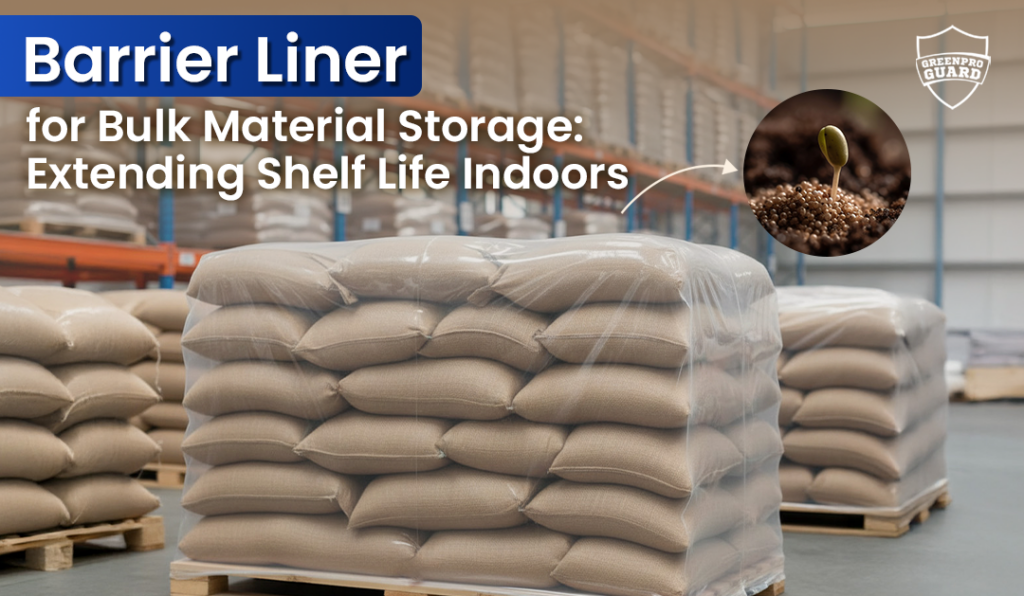
Why Barrier Liners Matter in Indoor Hermetic Storage
In today’s agricultural landscape, safeguarding bulk commodities such as seed and pulses is more critical than ever. Indoor hermetic storage powered by high-performance barrier liner systems offers a strategic solution to a long-standing challenge: preserving product quality over time without relying on chemical treatments. These liners form a powerful airtight shield that prevents external elements from compromising valuable produce.
For large-scale producers, seed banks, exporters, and agri-logistics handlers, storage is not just about containment. It’s about protection, shelf-life extension, and value preservation. From temperature swings to ambient humidity and pests, traditional storage systems fail to control the very elements that degrade product integrity. That’s where barrier liners step in.
How Barrier Liner Extend Shelf Life of Bulk Materials
Barrier liners are constructed from multi-layered materials, often including polyethylene and EVOH (Ethylene Vinyl Alcohol), which provide superior oxygen and moisture barriers. When installed properly, they create an internal environment that reduces oxidation, moisture penetration, and the risk of infestation. This enables agricultural products to retain their weight, color, aroma, and quality for much longer durations.
By eliminating the oxygen available inside the storage unit, biological activity is drastically minimized. This means that fungi, mold, and insects cannot thrive. Without the need for fumigation or repeated treatment, the product inside stays safe and viable for future use.
For seed and pulses, especially, preventing moisture ingress is crucial. Seeds are hygroscopic. They readily absorb moisture from the air. Once they reach a critical moisture level, their storage life begins to decrease. A barrier liner prevents this by providing a tightly controlled environment, which is crucial for retaining quality and extending the overall usability window.
Barrier Liner and Seed Germination
While the primary role of barrier liners is long-term bulk material protection, their impact on seed germination is equally valuable. Germination potential is often lost due to fluctuations in moisture and temperature during storage. Improper storage accelerates seed ageing, reduces vigor, and ultimately leads to a decline in viable seed output.
Enhancing Seed Quality with Hermetic Protection
Using indoor hermetic storage solutions like barrier liners ensures that seeds remain in a stable, low-humidity, low-oxygen environment. This helps preserve the internal biological structure of seeds, supporting their natural ability to sprout when required. Whether it’s maize, soybean, or chickpeas, high-quality germination is retained better under airtight, stable conditions.
Barrier liners are especially important for seed banks and companies involved in high-value seed and pulses distribution. When seeds are stored in woven or jute sacks, they are exposed to the open atmosphere, which introduces spores, insects, and excess moisture. Hermetically sealed systems, however, eliminate these vulnerabilities.
Advantages of Barrier Liner in Indoor Storage
- Moisture Resistance: Prevents hygroscopic seeds and pulses from absorbing ambient humidity.
- Pest Control: Reduces oxygen to levels that suppress insect and fungal development.
- Non-Chemical Preservation: Eliminates the need for artificial fumigation or pesticides.
- Shelf Life Extension: Retains physical and nutritional qualities for longer periods.
- Reduced Losses: Less spoilage means higher profit margins and better food security.
- Reusability: Premium barrier liners can be reused multiple times when properly maintained.
- Safe for All Indoor Conditions: Works in warehouses, silos, and confined storage units.
While seed germination and preservation remain a central benefit, barrier liners are also highly effective for commodities like whole grain rice, flour, coffee, and dry animal feed. Any product that can be compromised by moisture or pests can benefit from the same airtight protection.
In urban or space-constrained environments, indoor hermetic storage is often the only option available. This makes barrier liners a vital investment not just for large-scale farms, but also for seed retail units, government procurement warehouses, and private agri-traders.
Greenpro Guard’s Contribution to Safer, Smarter Storage
At Greenpro Guard, we understand that long-term viability starts with the right packaging. Our range of barrier liners is engineered for strength, flexibility, and high-barrier protection. Whether you’re safeguarding seed and pulses for the next season or ensuring the shelf life of grains for export, our solutions are designed for impact.
We use proprietary layering technologies that preserve seed quality without compromise. From high-capacity liners to custom indoor-compatible options, Greenpro Guard’s products support both commercial scalability and sustainable storage practices.
Poor storage can destroy months of planning and investment. A barrier liner is more than just a packaging option; it’s a protective environment that gives seeds and grains the best chance to last, sprout, or sell. As climate variability increases and food security becomes more fragile, it is vital to choose reliable storage solutions that truly deliver.
FAQ
A barrier liner is a multi-layered, hermetically sealed bag used to store bulk agricultural products and coffee beans. It protects contents from moisture, pests, and oxygen to extend shelf life.
By creating a stable, low-moisture environment, barrier liners preserve the biological integrity of seeds, maintaining their ability to germinate even after long storage periods.
Yes, high-quality barrier liners can be reused if properly cleaned, dried, and stored. However, inspection for wear and tear is recommended before reuse.
While ideal for indoor hermetic storage, they can also be used in shaded outdoor environments, provided they are protected from sharp objects and UV exposure.
Seeds and pulses, including maize, beans, and chickpeas, as well as whole grain rice and coffee, benefit significantly due to their sensitivity to moisture and pests.